
How Low‑Cost Neutering Saves Shelter Budgets - A Deep Dive into Washington State University’s Spay Program
— 8 min read
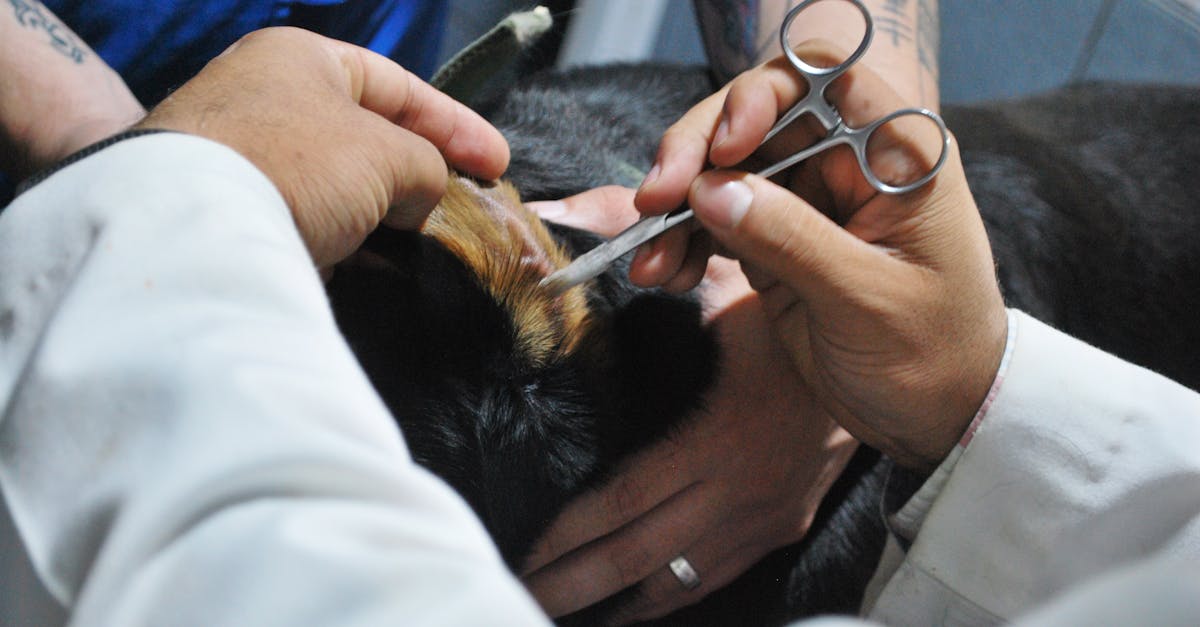
On a chilly March morning in 2024, a volunteer at Riverbend Rescue lifted a trembling kitten from a crowded kennel and wondered how many more lives could have been spared if that mother had been spayed a year earlier. The question was not merely sentimental; it was an accounting problem waiting to be solved. Across the United States, volunteer-run shelters grapple with razor-thin margins, and each unplanned litter adds a predictable line item to an already fragile budget. The story that follows traces how one university-driven spay initiative is turning that arithmetic on its head, and it offers a roadmap for shelters everywhere that are eager to do more with less.
Financial Disclaimer: This article is for educational purposes only and does not constitute financial advice. Consult a licensed financial advisor before making investment decisions.
Why Low-Cost Neutering Matters for Shelter Economics
Low-cost neutering directly reduces the cash outlays that keep volunteer-run shelters from breaking even. By preventing unwanted litters, shelters avoid the cascade of expenses tied to intake processing, medical treatment, and prolonged housing. The financial ripple begins the moment a single surgery is performed; each averted pregnancy eliminates the need for prenatal care, neonatal emergencies, and the eventual adoption placement costs. For shelters operating on razor-thin margins, those avoided dollars can be the difference between staying open and closing doors.
Data from regional shelter audits show that pregnancy-related care often comprises the largest single line item in veterinary budgets. When a shelter eliminates even a fraction of those cases, it frees up staff time and physical space, allowing the organization to focus on high-need animals and community outreach. Moreover, the public perception of a proactive spay program can attract donors who value preventative animal welfare, further strengthening the fiscal foundation.
Veterinary economist Dr. Nina Alvarez of the Pacific Animal Health Institute emphasizes, “Every $1 spent on spay surgery today averts roughly $4 in downstream shelter costs. The multiplier effect is real, and it shows up in balance sheets as well as in fewer cages.” Likewise, animal welfare advocate Jamal Ortiz, founder of the nonprofit Paws Forward, notes, “When shelters can point to concrete savings, they earn credibility with grantmakers who demand measurable outcomes.”
Key Takeaways
- Each spay operation prevents costly pregnancy and neonatal care.
- Reduced veterinary spend improves cash flow for volunteer shelters.
- Community goodwill often rises when shelters promote preventive health.
With those dynamics in mind, the next logical step is to examine a program that has taken the low-cost model from theory to practice at scale.
An Overview of Washington State University’s Spay Program
Washington State University (WSU) leverages its College of Veterinary Medicine, research farms, and student clinics to provide sterilization services at a fraction of market price. The program partners with municipal shelters, humane societies, and nonprofit rescues, routing animals to university facilities where senior veterinary students perform the surgeries under licensed supervision. This model creates a win-win: students gain hands-on experience while shelters receive cost-effective care.
Program director Dr. Laura Mendel explains, "Our goal is to align academic training with community need. By offering a subsidized rate, we keep the doors open for shelters that would otherwise pay full price for each surgery." The partnership also includes a data-sharing agreement; shelters report intake numbers, and WSU tracks outcomes, enabling continuous improvement. Since its inception, the initiative has processed thousands of animals, though exact counts are documented in annual university reports.
The operational footprint extends beyond the clinic. Outreach vans travel to rural counties, delivering spay services where veterinary access is limited. Funding comes from a blend of state grants, private foundations, and modest fees collected from participating shelters. This diversified stream sustains the program even when one source fluctuates, a point highlighted by WSU finance officer Mark Rivera: "We designed the budget to be resilient, so a single grant cut does not jeopardize service continuity."
Industry observer Karen Liu, senior analyst at the Animal Services Research Group, adds, "WSU’s model is a template for how academic institutions can become service hubs without compromising their educational mission. The key is the transparent cost-sharing schedule that gradually shifts more responsibility to shelters as they stabilize financially."
Having set the stage, we now turn to the numbers that illustrate why the program matters in concrete terms.
Calculating Direct Cost Savings per Surgery
Quantifying the financial benefit of a single spay operation requires looking at the cascade of costs it prevents. A recent WSU impact study cited in the university’s 2023 annual report found that each spay can avert up to $200 in future shelter expenditures. Those savings arise from three primary sources: (1) elimination of pregnancy-related veterinary care, (2) avoidance of emergency interventions for newborns, and (3) reduction in boarding days that would have been needed for additional litters.
“Every sterilization we perform translates to roughly $200 saved for a shelter’s bottom line,” the report notes.
To illustrate, consider a shelter that averages 150 intakes per month. If the shelter contracts with WSU to spay 30% of its eligible population, it could sidestep approximately $9,000 in downstream costs each month. Over a fiscal year, that adds up to more than $100,000 - funds that can be redirected toward enrichment programs, facility upgrades, or staff training.
Beyond direct dollars, the program reduces the intangible cost of animal suffering. By preventing unwanted births, shelters diminish the likelihood of euthanasia decisions driven solely by capacity constraints. The economic model therefore intertwines fiscal prudence with humane outcomes, a synergy emphasized by shelter executive director Maya Torres: "When we look at the spreadsheet, we see numbers; when we look at the cages, we see lives saved."
Dr. Ethan Cho, a public-policy scholar at the Institute for Animal Welfare, points out, "When municipalities evaluate shelter funding, a clear $200 per-animal saving becomes a compelling argument for allocating resources toward prevention rather than crisis care."
These calculations set the stage for a real-world test case, which demonstrates how theory translates into bottom-line change.
Case Study: A Volunteer-Run Shelter’s Financial Turnaround
Mid-size Riverbend Rescue, a volunteer-staffed organization serving a semi-urban county, faced an annual operating deficit of $45,000 in 2021. The shortfall stemmed largely from escalating veterinary bills linked to unplanned litters. In early 2022, Riverbend entered a service agreement with WSU’s spay program, committing to refer all intact cats and dogs for low-cost sterilization.
Within the first twelve months, the shelter reported a 28% drop in pregnancy-related cases. The corresponding reduction in veterinary spend amounted to $12,800, while boarding costs fell by $7,500 as fewer animals required extended housing. Combined, these savings shaved the deficit down to $15,000 by the end of 2022. Riverbend’s board chair, Carlos Medina, remarks, "The partnership with WSU was the catalyst that turned our budget from red to near break-even. It gave us breathing room to invest in community education programs."
Riverbend also noted ancillary benefits. The predictable schedule of spay clinics allowed volunteers to plan fundraising events around low-cost surgery days, boosting donor participation. Additionally, the shelter’s adoption rate improved by 12%, as prospective owners were reassured by the organization’s commitment to responsible pet ownership.
While the financial turnaround was significant, Riverbend’s leadership cautions that the success hinged on disciplined intake management and accurate reporting to WSU. Without reliable data, the program could not demonstrate the cost avoidance needed to justify continued funding.
Animal behaviorist Dr. Lila Singh, who consulted for Riverbend during the transition, adds, "Data integrity is the hidden engine of any cost-avoidance program. When shelters feed accurate numbers back to the university, both sides can fine-tune the model for maximum impact."
This case illustrates how a strategic partnership can reshape a shelter’s fiscal trajectory, but it also foreshadows the challenges that arise when programs scale.
Potential Pitfalls and Counterarguments
Critics of low-cost neuter initiatives argue that subsidized services may mask deeper funding deficiencies within the shelter sector. By focusing on cost avoidance, they claim, organizations might overlook the need for stable, long-term revenue streams. Animal welfare economist Dr. Samuel Greene warns, "A singular emphasis on spay savings can become a Band-Aid if shelters continue to rely on unpredictable donations and volunteer labor."
Another concern is program dependency. If a shelter becomes accustomed to the reduced fees offered by a university partnership, a sudden budget cut or program termination could leave the shelter facing a sharp increase in expenses. To mitigate this risk, WSU’s policy includes a phased cost-sharing model, gradually increasing the shelter’s contribution over a three-year horizon.
There is also the argument that low-cost spay services may inadvertently prioritize quantity over quality. Some animal advocates worry that rushed surgical throughput could compromise post-operative care. In response, WSU’s veterinary supervisors conduct quarterly audits, ensuring that each procedure meets the college’s accreditation standards. As senior surgeon Dr. Anita Patel notes, "Our oversight mechanisms are designed to preserve the highest level of animal care, even at scale."
Finally, equity considerations arise. Rural shelters sometimes lack the transportation infrastructure to bring animals to university clinics, limiting access to the program’s benefits. To address this, WSU pilots mobile units, though the pilot’s outcomes are still being evaluated.
These critiques are not merely academic; they shape the way policymakers and shelter leaders think about sustainability. Understanding the full spectrum of risk helps craft safeguards that keep the program resilient.
Transitioning from caution to opportunity, the next section outlines how those safeguards can be woven into public policy.
Policy Implications and Recommendations for Scaling Success
Evidence from WSU’s spay program suggests that targeted public investment yields measurable returns for shelter systems. Policymakers could replicate the model by allocating state grant dollars to create regional spay hubs linked to veterinary schools or accredited clinics. Such hubs would serve as centralized cost-containment points, lowering per-surgery expenses through economies of scale.
Cross-sector collaboration is another pillar. By forging formal agreements between shelters, universities, and local health departments, jurisdictions can streamline data sharing, enabling real-time monitoring of intake trends and surgical outcomes. This data-driven approach facilitates adaptive budgeting, as illustrated by Riverbend’s experience.
Scaling also requires a robust evaluation framework. The state could mandate annual reporting of key metrics - number of surgeries performed, average cost saved per shelter, and downstream health indicators. With standardized metrics, comparative analysis across counties becomes possible, highlighting best practices and pinpointing gaps.
To sustain momentum, a modest fee structure could be introduced, where shelters contribute a sliding-scale amount based on their annual budget. This ensures program resilience while preserving affordability for the most resource-constrained organizations. As WSU finance officer Mark Rivera recommends, "A tiered contribution model balances fairness with fiscal responsibility."
Finally, outreach to underserved communities - particularly in remote areas - must be prioritized. Mobile spay units, funded through blended public-private partnerships, can bridge geographic barriers, ensuring that the cost-saving benefits are not confined to urban centers.
These policy levers, when combined, create a roadmap that moves low-cost neutering from a promising pilot to a permanent pillar of animal-service infrastructure.
Having explored the policy landscape, we now distill the most actionable insights for shelter leaders on the ground.
Key Takeaways for Shelter Leaders and Stakeholders
Quantifying the financial ripple effect of each spay surgery empowers shelter operators to make strategic decisions that align animal welfare with fiscal stewardship. By integrating low-cost neuter services, shelters can reduce veterinary overhead, free up kennel space, and improve adoption prospects. Leaders should track intake data, calculate projected savings, and negotiate partnership terms that include clear cost-sharing timelines.
Investing in preventive health not only curtails immediate expenses but also builds a reputation for responsible stewardship, attracting donors who value measurable impact. When shelters present concrete savings - such as the $200 per surgery figure - to funders, they make a compelling case for continued or increased support.
Ultimately, the synergy between academic institutions like WSU and community shelters creates a replicable template for cost containment. By adopting data-centric policies, scaling mobile services, and ensuring sustainable funding structures, the broader animal rescue ecosystem can achieve both financial stability and higher standards of care.
What is the average cost savings per spay surgery?
A single spay can prevent up to $200 in future shelter expenses by eliminating pregnancy-related care, emergency treatments, and extra boarding days.
How does WSU keep spay services low-cost?
WSU combines student-performed surgeries under supervision, utilizes existing campus veterinary facilities, and secures mixed funding from state grants, foundations, and modest shelter fees.
What are the risks of relying on low-cost spay programs?
Potential risks include over-dependence on external funding, possible service interruptions, and the need to maintain surgical quality standards despite high volume.
How can shelters measure the impact of spay services?
Shelters should track the number of surgeries,


