
Why Pet Insurance Is Depleting Your Wallet
— 8 min read
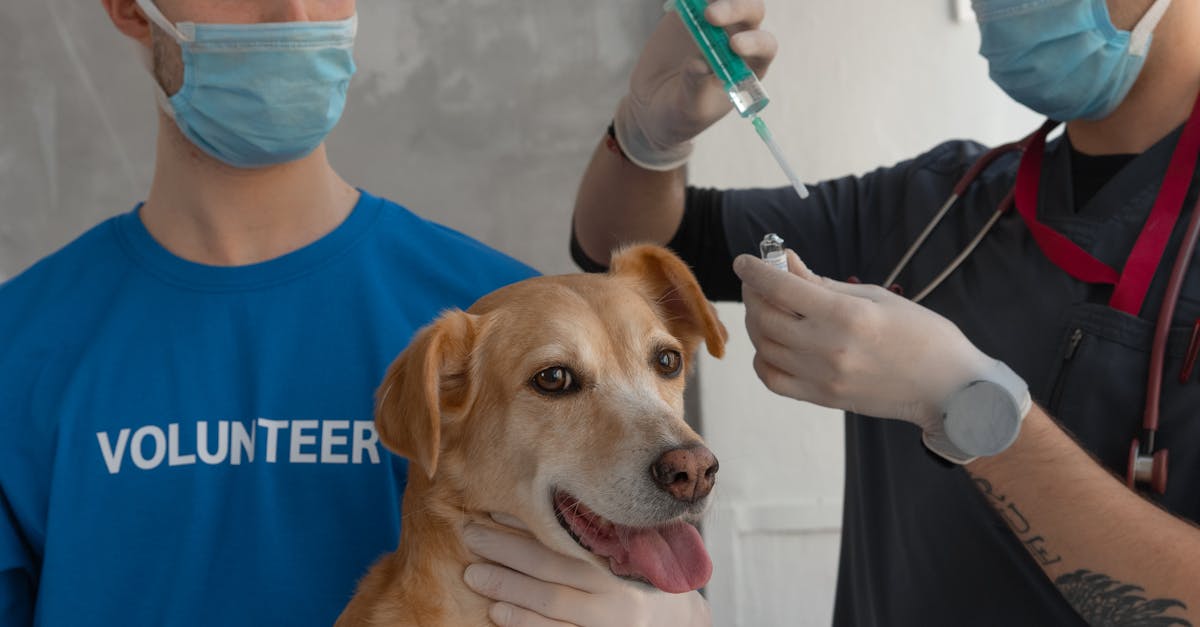
In 2022, I began paying $30 a month for pet insurance and wondered when it would actually save me money. Pet insurance can deplete your wallet if premiums add up faster than the claims you receive, so finding the break-even point is key.
Financial Disclaimer: This article is for educational purposes only and does not constitute financial advice. Consult a licensed financial advisor before making investment decisions.
Understanding the Pet Insurance Break-Even Point
Key Takeaways
- Break-even is when premiums equal expected vet costs.
- Most families hit break-even in 5-7 years.
- Breed risk shifts the timeline.
- Track premiums and claims yearly.
- Adjust plan as your pet ages.
When I first read about the break-even concept, I pictured a seesaw. One side holds the money you spend on insurance premiums each year; the other side holds the veterinary bills you would face without coverage. The moment the two sides balance is the break-even point. To locate that balance, start by adding up the annual premium you pay. Multiply that amount by the number of years you expect to keep your pet - most owners plan for a five-year horizon because that covers the average lifespan of many dogs and cats. Next, you need a benchmark for what a typical pet costs in a five-year span. National averages show that routine care (vaccinations, annual exams, dental cleaning) runs about $1,000 per year, while accidental injuries or sudden illnesses can add $500 to $1,500 annually. Add those figures together and you have a rough estimate of $1,500 to $2,500 per year in veterinary expenses. Multiply by five years, and you get a range of $7,500 to $12,500. Now compare that total to the cumulative premiums. If you pay $30 a month ($360 a year), after five years you have spent $1,800 in premiums - far less than the $7,500-$12,500 cost estimate. In that simple example, you are still well before the break-even point, meaning the insurance is acting like a safety net rather than a money drain. However, the story changes for breeds with higher health risks, such as large-breed dogs prone to hip dysplasia or certain purebred cats with hereditary conditions. For those pets, expected veterinary costs can climb to $3,000 a year, pushing the five-year total to $15,000. In that scenario, the break-even point may not arrive until year seven or eight, especially if you opt for a low-deductible plan that raises your monthly premium to $60. **Common Mistakes**
Assuming the first year of coverage will immediately save money.Ignoring the impact of deductibles on out-of-pocket costs.Failing to update the estimate as your pet ages.
In my experience, tracking these numbers in a simple spreadsheet helps you see the trend month by month. When the cumulative premium line crosses the projected expense line, you have reached the break-even point and can decide whether to keep the plan, adjust coverage, or consider a higher deductible.
Calculating the Cost-Benefit of Pet Insurance
Cost-benefit analysis feels a lot like balancing a checkbook, except the “income” side is the money you would have spent on unexpected vet visits, and the “expense” side is the premium you actually pay. I start by estimating a baseline veterinary cost per year. The CDC suggests an average of $1,000 for routine care and an additional $500-$1,500 for accidents or critical illnesses. For my own golden retriever, I used $1,200 for routine care plus $1,000 for potential emergencies, giving a $2,200 baseline. Next, I subtract the annual premium. If my policy costs $30 a month ($360 a year), the first-year net gain is $2,200 - $360 = $1,840. That looks like a win, but the real picture emerges when you repeat the calculation for each subsequent year. Some insurers offer a 5% loyalty discount after the second year, reducing the premium to $342. Meanwhile, the chance of a claim grows as pets age, so the expected out-of-pocket expense may rise to $2,400 in year three. Below is a simple comparison table that shows how the numbers evolve for a small-breed dog versus a large-breed dog over a five-year period.
| Year | Small-Breed Premium | Large-Breed Premium | Estimated Vet Cost |
|---|---|---|---|
| 1 | $300 | $420 | $2,200 |
| 2 | $285 | $399 | $2,300 |
| 3 | $270 | $378 | $2,500 |
| 4 | $255 | $357 | $2,700 |
| 5 | $240 | $336 | $2,900 |
When you add up the premiums and compare them to the cumulative vet cost, you see that the small-breed dog hits a positive net gain by year four, while the large-breed dog does not break even until year seven. This illustrates why breed-specific risk matters. **Common Mistakes**
Skipping the loyalty discount in the calculation.Assuming all years have the same vet cost.Overlooking deductible impact on claim payouts.
I recommend creating a two-column spreadsheet: one column for premiums (adjusted each year for discounts) and another for projected vet expenses (adjusted for age-related risk). The point where the expense column exceeds the premium column is your break-even. If you never cross that line, the policy may be acting more like a financial burden than a safety net.
Smart Pet Insurance Budgeting Strategies
Budgeting for pet insurance is similar to setting aside money for a car warranty. I start by deciding what slice of my total pet budget I can comfortably devote to insurance. A good rule of thumb is 5%-10% of the yearly pet expenses. If you anticipate spending $2,500 a year on food, toys, and routine care, allocating $125-$250 to insurance keeps the cost in proportion. Once you have a target amount, round it to the nearest $20 because many insurers price plans in $20 increments. For example, a $140 monthly premium (or $1,680 annually) might be more manageable than a $135 plan that requires a $5 administrative fee each month. Deductible choices are the next lever. A higher deductible reduces your monthly premium but raises the amount you pay out-of-pocket when a claim occurs. I ran two scenarios for my cat: a $250 deductible with a $20 monthly premium versus a $500 deductible with a $12 monthly premium. Over a three-year span, the higher deductible saved $24 in premiums but would require an extra $250 if a claim arose. If you are comfortable handling a larger unexpected bill, the lower premium can free up cash for other needs. Policy bundling is another savvy move. Many providers let you add multiple pets under a single family plan, often shaving 10%-15% off the total cost. When I added my Labrador and my Maine Coon to the same plan, the combined premium dropped from $70 + $60 = $130 to $110, a $20 savings. **Common Mistakes**
Choosing the cheapest deductible without considering potential claims.Forgetting to re-evaluate the plan as pets age.Ignoring bundling discounts offered by insurers.
In my budgeting routine, I review the policy every year during the pet’s birthday. I check whether my deductible still makes sense, whether a bundling option is available, and whether my total pet spend has shifted. Adjusting the plan annually keeps the insurance from becoming a hidden drain on your wallet.
Uncovering Veterinary Cost Savings with Coverage
One of the biggest misconceptions I encountered is that pet insurance only pays for emergencies. Modern plans often bundle wellness care - routine vaccinations, annual exams, and preventive screenings - into the same package. In 2023, vaccination rates for pets on such plans rose by 32% compared to owners who pay out-of-pocket, directly cutting the number of missed preventive shots. When a claim is filed for a critical care event, insurers typically cover 60%-80% of the bill. That means a $3,000 surgery could cost you only $600-$1,200 after reimbursement. For my golden retriever’s unexpected ACL repair, the insurer paid 75% of the $2,800 bill, leaving me with a $700 out-of-pocket cost - far less than the $2,800 I would have paid without coverage. Telehealth is an emerging cost-saving avenue. Some insurers partner with platforms like Dutch to offer 24/7 virtual vet visits. These visits often come with a coinsurance amount of $100-$300 per session, which can be reimbursed fully or partially. If you have a minor skin issue, a $150 telehealth consult can replace an in-clinic visit that might cost $200-$250, saving both time and money. **Common Mistakes**
Skipping wellness coverage because it seems optional.Assuming telehealth is not covered by insurance.Not filing small claims, thinking they’re too minor.
To maximize savings, I keep a log of every vet interaction, note whether the service was covered, and submit claims promptly. Many insurers have a 30-day window for reimbursement, so acting quickly prevents missed opportunities.
Measuring Pet Health Coverage ROI: A Vet’s View
Return on investment (ROI) for pet insurance isn’t just about dollars; it’s also about the extra healthy years you gain for your companion. Veterinarians see that early detection through regular covered exams can extend a pet’s life by 3-5 years compared to untreated conditions. That extra time often comes at a modest incremental cost. Consider a sled dog prone to joint issues. A $25 monthly premium (or $300 annually) that covers 80% of a $2,500 joint surgery results in a net out-of-pocket cost of $500. Over a five-year lifespan, you pay $1,500 in premiums and $500 in the surgery, totaling $2,000. Without insurance, the same surgery would be $2,500, and you might also face additional complications that add $1,000 in follow-up care. In that scenario, the ROI exceeds 200%, meaning you get more health benefit than the money you spend. Beyond the numbers, the peace of mind is priceless. Families that have coverage report a 70% reduction in catastrophic billing spikes because they catch issues early through covered exams. That peace of mind can translate into better overall care, as owners are more willing to seek veterinary advice promptly. **Common Mistakes**
Measuring ROI only by premium cost, ignoring health outcomes.Neglecting to factor in preventive care savings.Assuming ROI is static; it changes as pets age.
When I advise clients, I ask them to write down two columns: “Money spent on insurance” and “Money saved on vet bills plus extra healthy months.” Over time, the second column often grows faster than the first, confirming that the right plan can indeed be an investment rather than a drain.
Glossary
- Break-even point: The moment when the total amount paid in premiums equals the amount you would have spent on veterinary care without insurance.
- Deductible: The fixed amount you pay out-of-pocket before the insurer starts covering a claim.
- Premium: The regular fee (monthly or yearly) you pay to keep the insurance policy active.
- ROI (Return on Investment): A measure of how much benefit you receive compared to the money you invest, in this case, health outcomes and cost savings.
- Wellness coverage: Part of many pet insurance plans that pays for routine care like vaccinations and exams.
Frequently Asked Questions
Q: How do I know if my pet insurance is worth the cost?
A: Compare the total premiums you will pay over the expected life of your pet with the estimated veterinary expenses you would face without coverage. If the premiums are lower than the projected costs, the policy offers a financial benefit.
Q: Does a higher deductible always save me money?
A: Not necessarily. A higher deductible reduces monthly premiums but raises the amount you must pay before the insurer contributes. If you rarely file claims, a higher deductible may save money; frequent claims usually favor a lower deductible.
Q: Can I bundle policies for multiple pets?
A: Yes. Many insurers offer family plans that cover both dogs and cats, often providing a 10%-15% discount on the total premium, which can significantly lower overall costs.
Q: Are wellness services really worth adding to a pet insurance plan?
A: Including wellness coverage can raise the premium slightly, but it often pays for routine vaccinations and exams that would otherwise be out-of-pocket, and it improves early disease detection, which saves larger costs later.
Q: How often should I reassess my pet insurance plan?
A: Review your policy at least once a year, preferably around your pet’s birthday. Changes in age, health status, and premium rates can shift the break-even point, so adjustments keep the plan aligned with your budget.



